 Log in
What is a property CRM?
A property CRM is software that helps a real estate team organise relationships and the property work connected with them. CRM stands for customer relationship management. A property-focused system adds the context agents need, such as developments, listings, viewings, deals, leases and the next client conversation.
What is a property CRM?
A basic contact list stores names and ways to reach people. A property CRM helps the agency understand the relationship, the related property work and what needs to happen next. It gives colleagues a shared record so a client conversation does not depend entirely on one person's memory or private spreadsheet.
The exact scope varies by product. Some tools focus on lead follow-up; others include listings, rental administration or billing. Evaluate the actual workflows needed by the agency instead of assuming every product described as a real estate CRM contains the same functions.
Meaning · word origin · property examples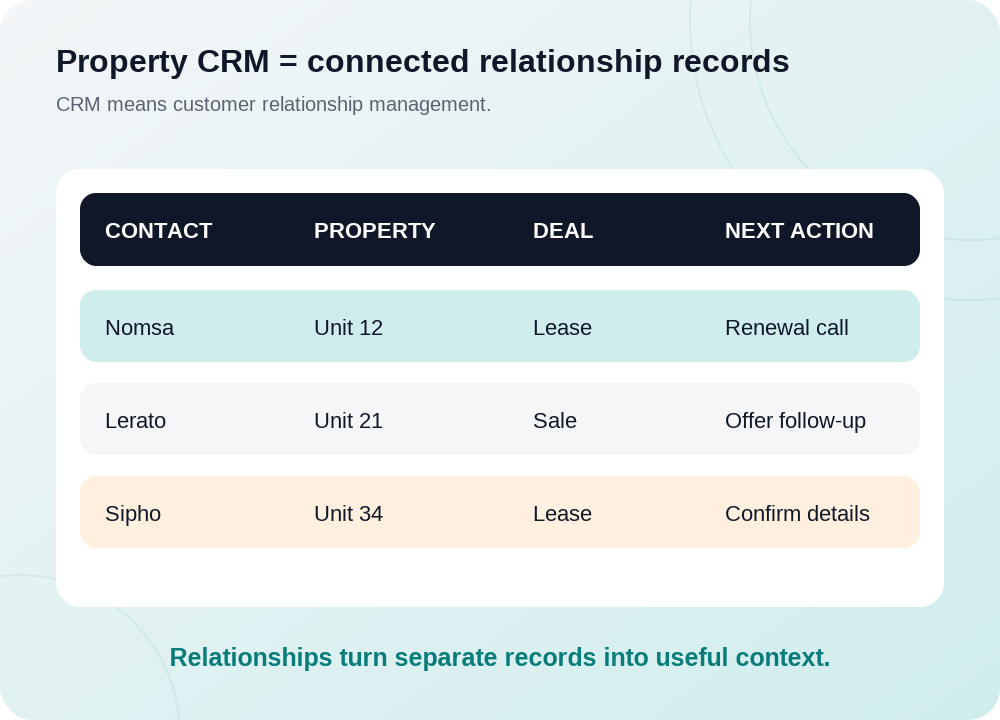
What does CRM stand for?
CRM is an initialism formed from customer relationship management. Property CRM combines that business term with a sector description. Real estate CRM and estate agency CRM are related phrases used when the software is intended for property professionals.
The term describes a purpose rather than a guarantee of particular features. It also does not mean every person in the database is already a paying customer. Prospective buyers, landlords, tenants, sellers and other contacts can all be part of the relationships an agency needs to manage.
Which property workflows should a CRM connect?
Begin with the work that repeatedly crosses between people or tools. An enquiry may become a viewing, a deal and an invoice. A landlord relationship may involve several leases, repairs and renewal conversations. The value of a shared system depends on whether colleagues can follow that context without recapturing the same details.
Map the handovers before comparing software. Identify who receives an enquiry, who qualifies it, who progresses the transaction and who handles the financial administration. Then use those real examples to test whether the system supports the agency's process.
- Contacts and the relevant property relationships.
- Assigned responsibility and the next dated action.
- Sales or rental progress and supporting documents.
- Billing, reporting and communication needed by the team.
A property CRM, portal and accounting system have different jobs
A property portal helps market listings to an audience. A CRM helps the agency manage relationships and work. A billing function creates and tracks charges, while specialised accounting requirements may extend beyond the CRM's scope. An agency may need these functions to connect, but they should not be treated as identical.
A tenant or owner portal is another separate concept: it lets external clients access a service. EasyPropCRM is designed for the agency's internal team. Clients receive communications such as invoices, emails and calendar invitations rather than logging into the internal CRM.
What makes a property CRM useful after setup?
Good records and consistent team habits matter as much as the feature list. Agree on contact categories, stage definitions and responsibility before importing a large file. Check duplicates and outdated information, and make the next action part of the normal working routine.
Personal information also needs appropriate handling. The agency should decide who needs access, how information is corrected and how records are retained under its policies and applicable requirements. Buying software does not automatically establish those decisions or remove the need to train staff in the agreed process.
What does EasyPropCRM bring together?
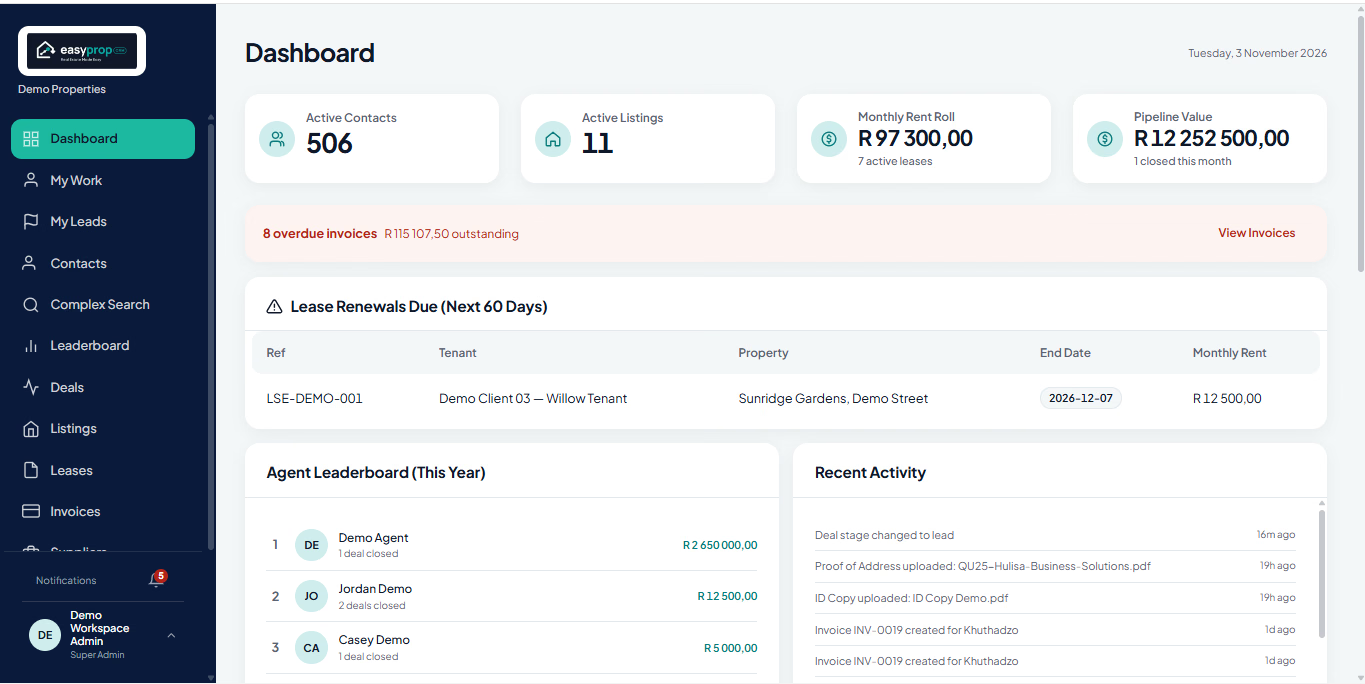
EasyPropCRM brings contacts, deals, leases, invoicing, reporting and portal syndication into the agency workflow. Its product scope includes configurable deal stages, commission calculations, lease fees, renewal alerts, FICA document tracking, app calling, bulk SMS and email, and branded invoices and emails.
Setup, migration and training help a team move its working information into the platform. A good evaluation starts with one representative sale and one lease, then checks the handovers, records and reports. Ask about specialised requirements directly so the decision reflects the agency's actual work rather than the length of a feature checklist.
Property software categories compared
| Category | Main purpose | Question for the agency |
|---|---|---|
| Contact list | Store basic contact details | Can colleagues understand the relationship? |
| Property CRM | Coordinate relationships and work | Can the team follow the whole workflow? |
| Listing portal | Expose listings to prospective clients | How do enquiries return to the agency? |
| Accounting system | Handle the relevant financial records | Which specialist accounting functions are needed? |
Further reading on property crm
Explore the references and related guidance behind this term.

Property CRM FAQs
Short answers to the questions that come up after the main details.
Explore the help centreCan a small estate agency use a property CRM?+
Yes. The useful question is whether the system fits the team's work and budget. Small teams also need clear follow-ups, consistent records and reliable handovers.
Does property CRM mean property management software?+
The scopes can overlap, but they are not automatically identical. Check the rental, maintenance, billing and reporting functions required by the agency.
Does EasyPropCRM let clients log in?+
No. EasyPropCRM is for the internal agency team. Clients receive invoices, emails and calendar invitations through the relevant workflows.
Can a CRM replace every accounting tool?+
Do not assume so. EasyPropCRM includes invoicing and bank payment matching; confirm any specialised accounting or trust-accounting requirements separately.
Ready to see your property workflow?
One subscription for deals, billing, admin and portal syndication. See how EasyPropCRM fits your agency with a focused demo.