 Log in
Real estate follow-up and renewal reminders
Turn a promised follow-up into a clear next action. Keep the task, timing and contact context together so the responsible person knows what to do next.
Reminders: the essentials for your property team
Schedule follow-ups around actual client commitments and agency responsibilities.
Use clear task descriptions that still make sense when another colleague takes over.
- Give each reminder a purpose, owner and date.
- Review upcoming and changed commitments.
- Use callback invitations with the configured communication workflow.
What makes a property CRM reminder useful?
A useful reminder connects a future action to the person and context that explain it. “Follow up” is difficult to act on when an agent has several active conversations. “Confirm Friday access with the landlord before contacting the buyer” explains the task, its dependency and why the timing matters.
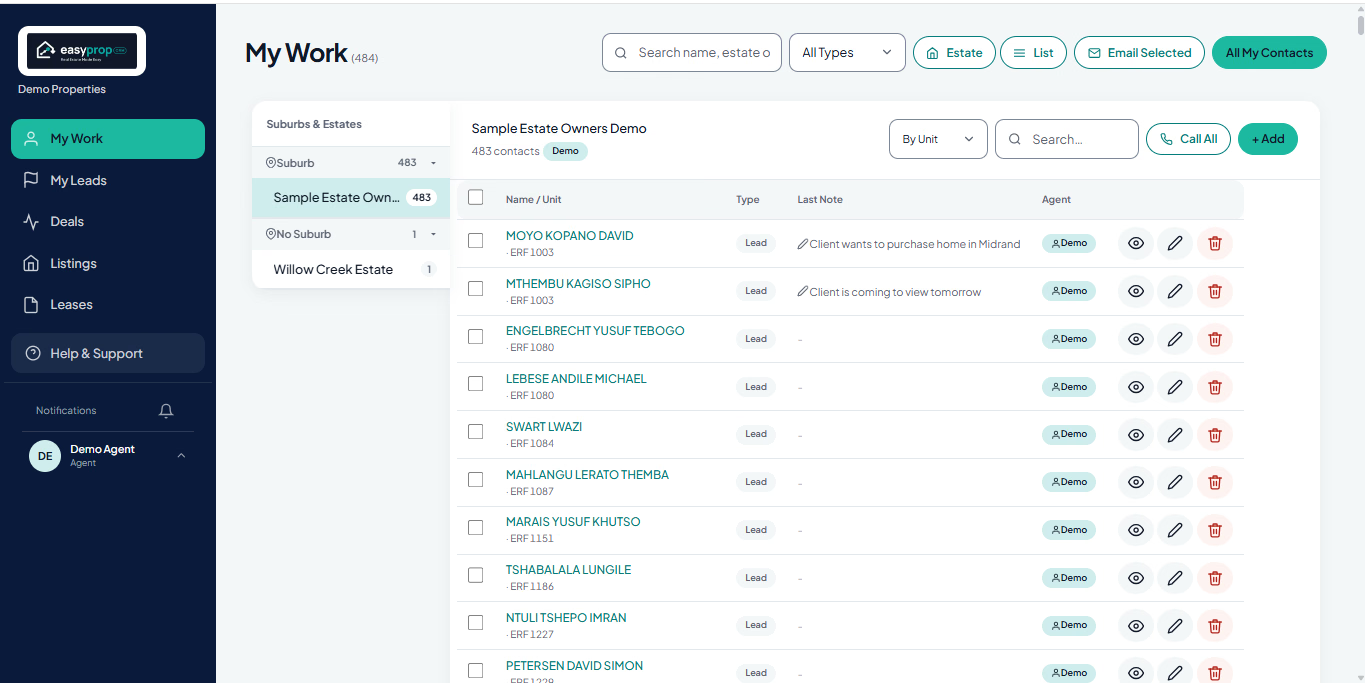
EasyPropCRM supports contact activities and dated reminders so that the next conversation stays close to the record. Agents can review notes before acting and update the outcome afterwards. The reminder is an organising aid, not a substitute for the person’s judgement about whether the plan is still relevant or whether another colleague now owns the work.
Which property tasks benefit from reminders?
Viewing confirmations, buyer feedback, landlord updates, document requests and lease renewal conversations all have a next action that can be forgotten when they remain only in an inbox or personal notebook. A reminder is useful when the team knows what needs doing and who should do it.
Use the relevant contact as context and describe the intended outcome. A renewal discussion needs the lease term checked first; a document request needs the missing item identified; a buyer callback may depend on a seller’s answer. Keep these differences visible rather than using the same generic title for every task. The task should help the agent prepare before contacting the person.
How should callback dates and times be chosen?
Start with the commitment made to the client, then check the agent’s responsibilities and any dependencies. If the person requested a call after work, record a suitable time rather than an arbitrary morning deadline. Where the agency needs to review information first, allow that internal work to happen before the promised callback.
For lease-related tasks, distinguish internal planning dates from formal notice requirements. A CRM reminder can help the team organise a conversation, but it does not determine a legal deadline. If the schedule changes, update the reminder and the relevant communication. An old calendar entry should not remain the only indication of a new arrangement.
How do callback reminders and calendar invitations work together?
The EasyPropCRM callback workflow includes calendar invitations sent to the agent and client. This helps both parties understand the intended appointment. The contact details, timing and description need to be correct, and the agency’s calendar and email delivery configuration should be checked during setup.
An invitation is a communication about the planned event; it should not be treated as proof that the recipient has read or accepted it. Confirm important arrangements through the agency’s normal process. During onboarding, test an invitation to an authorised internal address and review what the recipient sees before relying on it for live client appointments.
What should happen after a reminder is acted on?
Record the actual outcome of the conversation and complete or update the relevant task. If the person did not answer, that is different from resolving the issue. If a new commitment was made, give it a clear next action and date rather than leaving the old reminder open with an ambiguous note.
Update the related deal or lease when the conversation changes its position. A successful callback might lead to a new viewing, a revised offer or a renewal decision. Keep the activity note understandable, but use the appropriate record for the commercial change. This lets the team distinguish work performed from progress made.
How can an agency keep follow-up routines consistent?
Agree who reviews upcoming work, how tasks are reassigned during leave and what happens when a reminder becomes overdue. The process should help the team recover an important commitment rather than encourage staff to close tasks simply to clear a list. An unresolved client question needs a meaningful next step.
During training, practise a completed callback, an unanswered call and a rescheduled appointment. Check the record and invitation behaviour in each case. The agency can then set realistic conventions for task titles and review frequency. Consistency matters most when someone else must pick up the work and understand exactly what remains to be done.
A follow-up workflow that preserves context
Define the action
Write the specific task and intended outcome against the relevant contact. Include the dependency that must be resolved before the conversation can succeed.
Set ownership and timing
Assign the appropriate person and choose a date and time that reflects the commitment. Check the agency’s configured invitation behaviour where a callback is scheduled.
Prepare and act
Read the current notes and relevant deal or lease before getting in touch. Confirm the plan is still valid rather than following an outdated reminder mechanically.
Record and reset
Document what happened, complete the handled task and set a new action when needed. Update any related commercial record that changed during the conversation.
Different follow-ups need different preparation
| Follow-up | Check beforehand | Useful outcome |
|---|---|---|
| Viewing confirmation | Property availability and access. | A clear time and agreed arrangement. |
| Buyer feedback | The property viewed and previous requirement. | Specific feedback and the next decision. |
| Renewal discussion | Current lease term and agency review process. | Recorded intention and further action. |
| Document request | The exact missing or unclear item. | A reviewed response or a defined escalation. |
- Use a specific action in the task description.
- Choose the correct contact and responsible agent.
- Check timing against the actual client commitment.
- Test configured calendar and email delivery.
- Record an unanswered call differently from a resolved task.
- Update the related deal or lease when the outcome changes it.

Reminders FAQs
Short answers to the questions that come up after the main details.
Explore the help centreCan reminders be used for lease renewals?+
Yes. Check the lease end date and set an internal follow-up for the relevant conversation. The CRM helps organise the work, while formal notice timing still needs to be checked against the agreement and applicable requirements through the agency’s approved process.
Do callbacks send calendar invitations?+
The callback workflow includes invitations to the agent and client. Confirm contact details and the account’s calendar and email setup during onboarding. Test what the recipient receives, and do not treat an invitation as proof that the appointment was accepted.
What if the person does not answer a callback?+
Record that outcome clearly and decide the appropriate next action under the agency’s communication practice. Do not mark the underlying issue as resolved simply because an attempt was made. A new reminder should explain what remains open and when another attempt is appropriate.
Can a colleague handle a reminder during leave?+
Arrange the necessary assignment and access through an authorised administrator. The contact note should explain the commitment and any dependency so the colleague can act without reconstructing the conversation. Review the planned tasks before leave begins rather than relying on an informal message alone.
How do reminders differ from deal stages?+
A reminder tells someone what to do and when. A deal stage describes the opportunity’s current position in the commercial process. A callback may lead to a stage change, but completing the activity does not automatically mean the deal has progressed to a new milestone.
What should agents check before sending a callback invitation?+
EasyPropCRM callback reminders send calendar invitations to both the agent and the client. That makes the agreed time visible beyond the agent's private notes. Use a clear description and check the contact details, date and time before sending, especially when a callback has moved after a viewing or document review.
See reminders in EasyPropCRM
Bring a workflow from your agency. Explore the records, responsibilities and next actions with an EasyPropCRM demo or a full-access free month.