 Log in
Lease management in a real estate CRM
Keep the agreement’s working details close to the person and property. EasyPropCRM brings lease dates, charges, repairs and renewal follow-ups into the agency’s daily workflow.
Lease management: the essentials for your property team
Record the lease terms your team needs for billing and ongoing administration.
Prepare renewal conversations before the lease reaches its recorded end date.
- Keep agreed dates and charges accurate.
- Distinguish recurring fees from once-off charges.
- Connect repairs and renewal discussions to the lease.
What does property lease management involve?
Lease management covers the ongoing administration of an agreed tenancy: who the tenant is, which property is involved, when the lease runs, what charges apply and what needs attention during the term. The signed agreement remains the reference for the parties’ actual commitments; the CRM helps the agency organise the operational record.
EasyPropCRM brings lease details together with tenant contacts, relevant documents, repairs, invoicing and reminders. This helps the team handle the tenancy as continuing work rather than a document filed away after signature. Agents, administrators and finance colleagues can each use the relevant information within their authorised access and responsibilities.
Which lease details should the agency capture?
Start with the correct tenant contact and property reference, then record the start date, end date, rent, deposit and agreed fees. Check the values against the signed agreement rather than a previous draft or an old spreadsheet. Make sure the team understands which date is the commencement date and which is an internal review date.
Procurement, administration and management fees can have different purposes and timing. Record the agreed basis so that a once-off charge is not confused with a monthly fee. Where the agreement includes a specific condition or exception, keep its supporting context available. A CRM field should not be used to silently change the meaning of the underlying agreement.
How does lease information support rental invoicing?
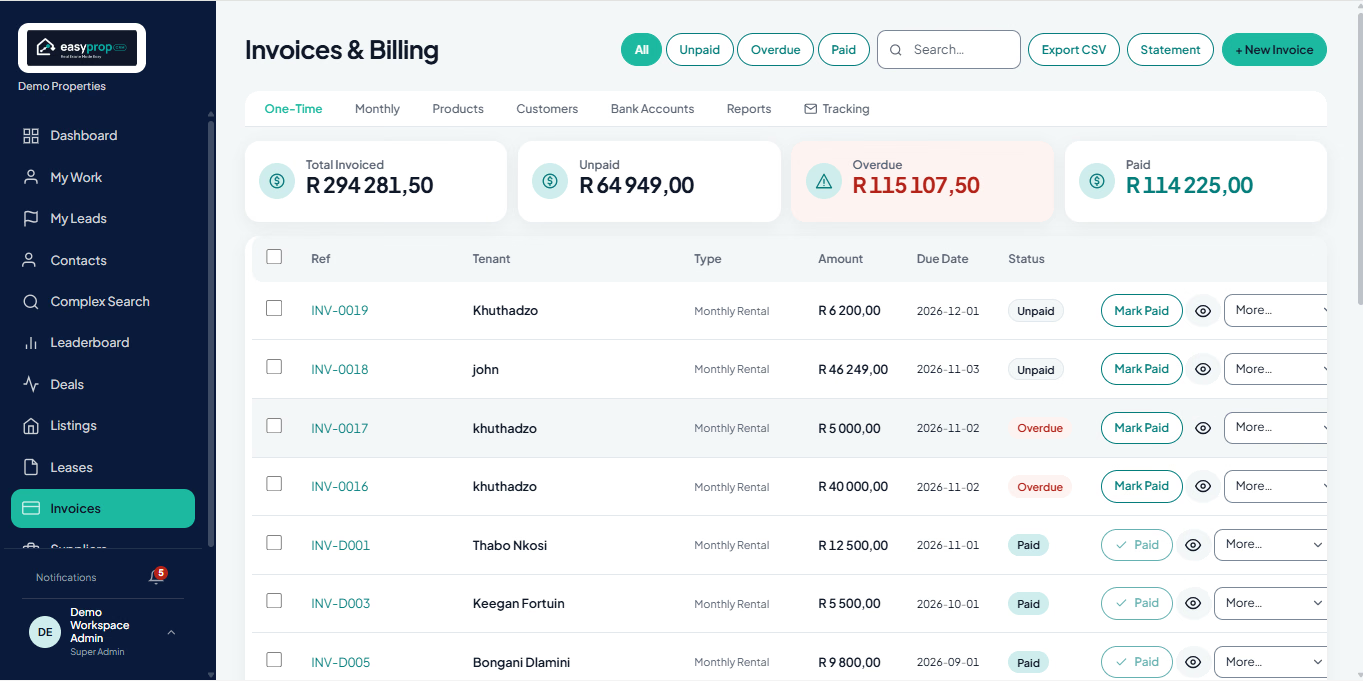
Lease details provide a practical starting point for preparing invoices. Rent and other agreed charges still need review before sending, particularly when there has been a change, a partial period or a repair-related item. Check the recipient, due date, line descriptions and applicable tax treatment in the financial workflow.
For a simple monthly planning example, R9,000 rent with a 10% management fee gives a R900 fee before any applicable tax or separate charges. That calculation does not establish who must pay the fee or whether it belongs on a tenant invoice; the signed mandate and lease arrangements determine that. Keep the commercial basis explicit before creating billing documents.
How can repairs be tracked against a lease?
Record a repair with enough context for another colleague to understand the issue, its current status and any known cost. A report of a problem is different from an approved repair, completed work or a charge that may be recovered. Keep those distinctions clear in the record and supporting notes.
The lease workflow can hold repair information, but it does not make every repair cost automatically billable to a tenant or landlord. Follow the agency’s approval process, check the relevant agreement and review any invoice line separately. If supplier coordination or a specialised maintenance workflow is important, demonstrate that exact requirement during onboarding rather than assuming it from a repair entry.
How should an agency prepare for lease renewal?
Use the recorded end date to plan the agency’s internal review and contact work. Give a named person responsibility for the renewal conversation and allow time to discuss the landlord’s intention, the tenant’s position and any proposed terms. The reminder should explain what needs to be discussed, not simply repeat the expiry date.
The free renewal planner can help organise follow-up dates, while the CRM keeps the tenant record, lease and conversation history together. Planning dates are not legal notice deadlines. Check the actual agreement and applicable requirements through the agency’s approved process before communicating a formal notice or presenting a renewal as already agreed.
What keeps a lease record useful during a handover?
A covering colleague needs more than the next payment amount. They should be able to identify the tenant and property, find the recorded term, understand open repairs and see whether a renewal discussion has started. Clear notes prevent a colleague from treating an unresolved proposal as an accepted change.
Before a portfolio handover, inspect a small sample of active leases and compare the CRM record with its supporting documents. Resolve missing dates, unexplained fee values and obsolete contact details. During setup, practise the full path from contact to lease to invoice and reminder. That reveals whether the team’s record conventions support actual daily administration.
How are procurement, admin and management fees kept in context?
Rental work can involve procurement, administration and recurring management fees as well as the rent itself. EasyPropCRM tracks these lease fees alongside the lease workflow, helping the team keep the agreed commercial details with the relevant property work. Record each fee clearly so a one-off charge is not confused with a recurring amount.
Consider a new letting with an initial procurement fee and an ongoing management fee. Before billing, check the relevant agreement, who pays each charge and when it is due. Review the scheduled invoice when the lease changes or renews. The software helps keep the records together; it does not determine the fee your agency is entitled to charge or replace approval of the underlying agreement.
A lease workflow from capture to renewal
Check the agreement and people
Select the correct tenant and property context. Review the signed term, rent, deposit and fee basis before entering values into the working record.
Prepare ongoing administration
Keep the relevant document available under agency policy. Identify who handles billing, repair follow-ups and the next review of the tenancy.
Review changes during the term
Record repairs and conversations as they occur. Check any proposed charge or revised term against the actual agreement before updating financial documents.
Plan and record the next term
Schedule the renewal conversation, record the outcome and update the lease when new terms are agreed. Keep proposals distinguishable from confirmed changes.
Different lease amounts need different treatment
| Item | Working purpose | Check before use |
|---|---|---|
| Monthly rent | Recurring tenancy charge. | Agreement, period and current amount. |
| Deposit | Recorded security amount. | Applicable agreement and the agency’s handling process. |
| Management fee | Agreed management charge. | Rate, fee basis, payer and tax treatment. |
| Repair cost | Known cost associated with an issue. | Approval, completion and whether recovery is authorised. |
- Match the tenant and property to the signed agreement.
- Verify start and end dates and the current rent.
- Separate once-off and recurring fees.
- Check repair status before raising a charge.
- Assign a renewal conversation and internal follow-up date.
- Review invoice details whenever agreed lease terms change.

Lease management FAQs
Short answers to the questions that come up after the main details.
Explore the help centreDoes EasyPropCRM replace the signed lease agreement?+
The CRM organises the working information and related activity. The signed agreement remains the reference for the actual terms. Check recorded rent, dates, deposit and charges against it, and retain supporting documents according to the agency’s access and retention process.
Can procurement, admin and management fees be tracked?+
Yes. Lease management includes these fee types. Record the basis and timing clearly, and review who is responsible for each charge. Do not treat a recorded fee as permission to add it to an invoice without checking the agreed commercial arrangement.
Are renewal planner dates legal notice deadlines?+
No. The planner helps organise internal follow-ups. Formal notice timing depends on the agreement and applicable requirements. Use the agency’s approved legal or compliance process for those decisions, while keeping the operational reminder and conversation history in the CRM.
Can tenants log in to review a lease?+
EasyPropCRM is for the agency’s internal team; tenants and landlords do not have client logins. Staff maintain the lease record and send the appropriate documents, invoices, emails or calendar invitations through the relevant workflows and approved communication process.
How should an agency test lease management during a demo?+
Use a representative tenancy with rent, a deposit, a management fee, an open repair and an upcoming renewal. Follow the record through billing and reminders. Remove personal details from the example and ask how exceptions such as changed terms should be handled.
How are procurement, admin and management fees kept in context?+
Rental work can involve procurement, administration and recurring management fees as well as the rent itself. EasyPropCRM tracks these lease fees alongside the lease workflow, helping the team keep the agreed commercial details with the relevant property work. Record each fee clearly so a one-off charge is not confused with a recurring amount.
See lease management in EasyPropCRM
Bring a workflow from your agency. Explore the records, responsibilities and next actions with an EasyPropCRM demo or a full-access free month.