 Log in
What is invoice status?
Invoice status describes where a bill stands in the agency's billing process. Labels such as draft, unpaid, paid and overdue help staff decide what to review or follow up. The status should agree with the invoice details and the supporting payment records, rather than simply reflecting an assumption.
What does invoice status mean?
A draft normally indicates that an invoice is still being prepared. An unpaid label indicates an amount remains to be settled in the recorded workflow. Paid indicates settlement has been recorded, while overdue relates an outstanding amount to its due date. The exact labels and transitions depend on the system and agency process.
Staff need to understand which event changes each status. Creating a PDF, sending an email, receiving proof of payment and matching money in the bank are distinct actions. Confusing them can lead to unnecessary reminders or missed collections.
Meaning · word origin · property examples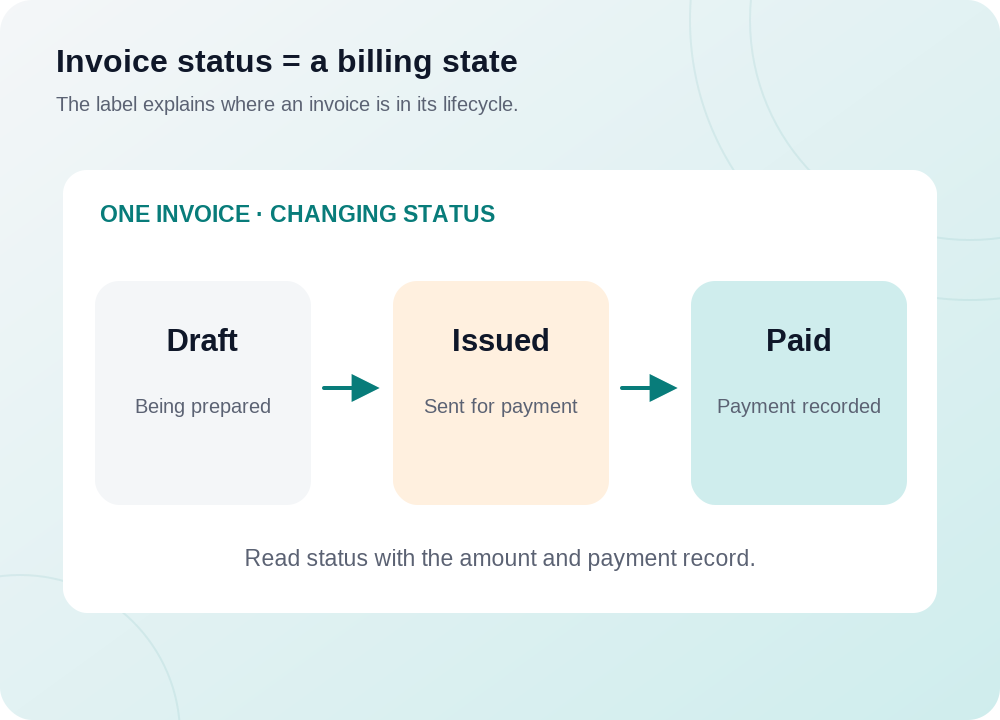
Where does the word invoice come from?
The Online Etymology Dictionary relates invoice to French envois, associated with the dispatch or sending of goods. The modern word describes an account of charges, while status identifies its current position in the billing workflow.
Invoice status is therefore a modern operational phrase built around an older commercial word. Its history helps explain the connection with supplying and sending, but today's status labels are defined by the billing process. A label cannot establish a tax treatment or payment outcome without the relevant supporting facts.
How should an agency manage invoice progress?
Check the recipient, charge description, service period, amount and due date before sending an invoice. Confirm that the charge follows the agreement and that any applicable tax information is correct. Keep the invoice reference consistent so the recipient and accounts team can identify the same bill.
When money arrives, match it to the correct invoice and period. A bank reference may be incomplete or cover more than one amount. Review differences before changing a status or sending a reminder. The purpose is to make the visible record reflect the financial evidence.
- Review the invoice before it leaves the agency.
- Keep the due date and amount outstanding clear.
- Verify receipts and allocations before marking settlement.
- Record corrections through the agency's approved accounting process.
Invoice, statement and payment evidence are different
An invoice describes a specific charge. A statement summarises activity and balances across a period or account. Proof of payment is evidence supplied about a payment action, but the receiving team still needs to establish whether funds arrived and were allocated correctly.
Tax invoice requirements are a further issue. SARS explains that a valid tax invoice needs specified information about the supplier, recipient and taxable supply. A paid badge or attractive PDF does not establish that those requirements have been met. The agency's billing setup should follow its actual VAT position.
What about partial payments and disputed charges?
A recipient may pay part of a charge, pay several invoices together or query one line while settling another. Keep the remaining amount and explanation clear. If the software's available labels are simpler than the situation, use the appropriate supporting record and accounts process rather than forcing a misleading conclusion.
A disputed amount is not automatically cancelled, and a reminder should not ignore a query already being investigated. Assign responsibility for the follow-up and keep the correspondence connected to the invoice. This helps the next colleague respond with context instead of repeating a generic demand.
Invoice status in EasyPropCRM
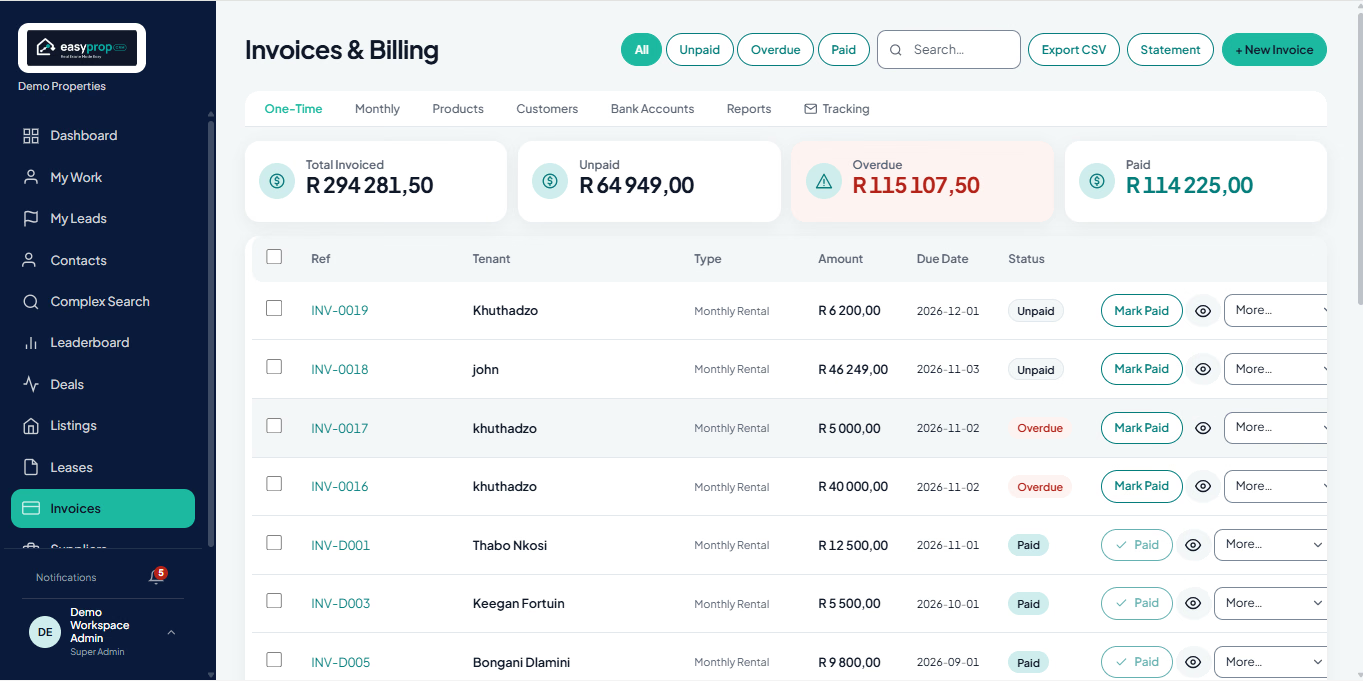
EasyPropCRM supports invoice generation, email delivery, scheduled billing and bank integration for matching payments to invoices. These workflows sit alongside the agency's contacts, deals and leases, helping staff understand the work behind a charge.
A useful product demonstration includes an unpaid invoice, a matched receipt and a payment that needs clarification. Check how the team identifies the outstanding amount and reviews the related transaction. Confirm any specialised accounting or trust-account requirements separately instead of assuming that every accounting function follows from invoice tracking.
Reading common invoice labels
| Label | Practical meaning | Check before acting |
|---|---|---|
| Draft | Charge is being prepared | Recipient, lines, amounts and approval |
| Unpaid | Settlement remains outstanding | Actual receipts and allocations |
| Overdue | Outstanding amount passed its due date | Due date, payment timing and open queries |
| Paid | Settlement has been recorded | Supporting bank match and correct allocation |
Further reading on invoice status
Explore the references and related guidance behind this term.

Invoice status FAQs
Short answers to the questions that come up after the main details.
Explore the help centreDoes sent mean paid?+
No. Sending an invoice communicates the charge. Payment and allocation are separate events.
Can an invoice be overdue even if the client sent proof of payment?+
Yes, if settlement has not yet been verified or allocated. Review the evidence before sending another reminder.
Is a paid invoice automatically a valid tax invoice?+
No. Payment status and tax invoice requirements are different matters. Check the required details and the agency's VAT position.
What should happen after an incorrect invoice is sent?+
Follow the agency's approved correction process and keep a clear record. Avoid silently changing issued financial documents without the appropriate review.
Ready to see your property workflow?
One subscription for deals, billing, admin and portal syndication. See how EasyPropCRM fits your agency with a focused demo.