 Log in
What is a contact role?
A contact role describes a person's relationship to the property work your agency handles: buyer, seller, landlord, tenant or another relevant relationship. It gives a colleague context before a conversation. It does not, by itself, prove ownership, grant access or establish permission to send marketing.
What is a property contact role?
A name and phone number identify someone, but they do not explain why that person is in the agency's records. The role supplies that missing context. A tenant may need help with an existing lease, while a prospective tenant is searching for a property. A seller may have signed an instruction, while a prospective seller may simply be asking about market conditions.
Useful role names describe relationships clearly enough that another agent can choose the right next question. They should not hide the difference between an enquiry, an established client relationship and a completed transaction.
Meaning · word origin · property examples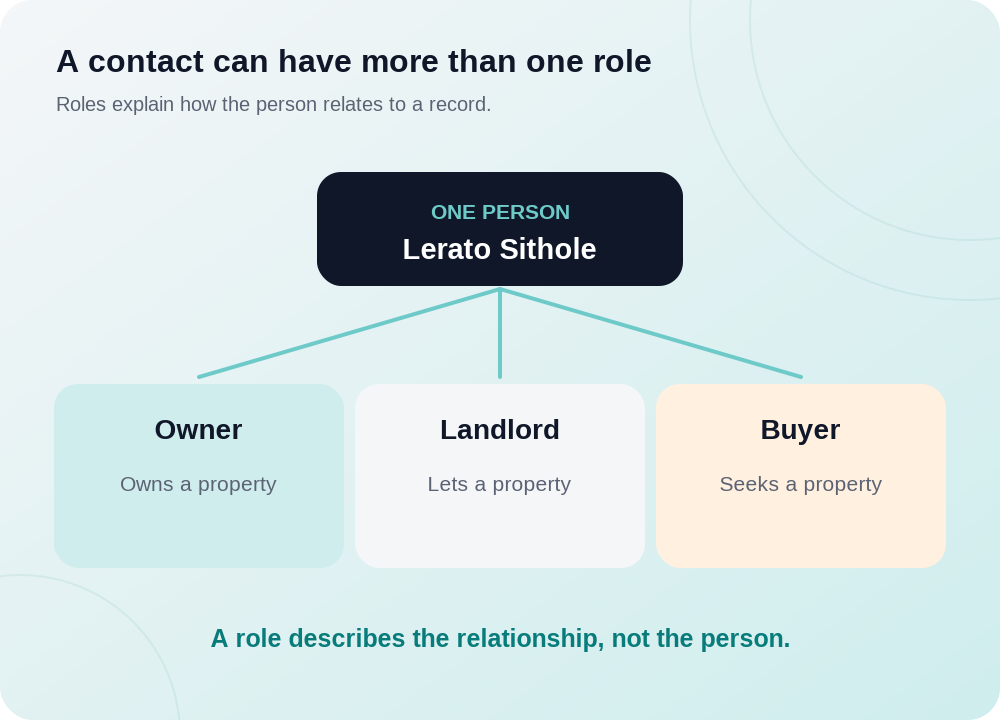
How is the term contact role formed?
Contact role combines two everyday business words. Contact refers to a recorded person or organisation with whom the agency communicates. Role describes the part that contact plays in a particular relationship. The phrase is a practical software label, with no single historical origin being claimed here.
Its meaning depends on context. A contact role concerns the client relationship; a user role concerns a staff member's permissions. Keeping these phrases distinct is particularly important when an agency discusses both client segmentation and internal access during software setup.
How do roles help a South African property team?
Roles help a team interpret enquiries, organise work and select relevant communication. Before speaking to someone, an agent can understand whether the discussion concerns ownership, a viewing, a tenancy or an investment search. Estate and suburb details then supply the location context.
Review the role after a meaningful change. A tenant who buys a home may still have a rental relationship to close. A landlord selling one property may retain another. Preserve the relevant relationship history rather than treating each change as a reason to forget previous dealings.
- Agree on a short, clear vocabulary before importing contacts.
- Distinguish prospective relationships from confirmed ones.
- Check the associated property and dates before changing a role.
- Review ambiguous labels with the agent who knows the relationship.
One person can have more than one property relationship
A person can rent their own home, own an investment unit and enquire about another purchase. Those are different relationships involving one person. Avoid creating duplicate contacts simply to make each spreadsheet category fit. First understand how the chosen CRM represents people and their related records.
A role also differs from a deal stage. Buyer describes a relationship; offer submitted describes progress on an opportunity. The relationship can continue even after a particular offer is declined. Separating these concepts makes reporting and follow-up decisions easier to understand.
What should be recorded alongside a contact role?
Record enough context to explain the role: the relevant address or development, the current enquiry or agreement and the person responsible for follow-up. Where ownership or authority matters, refer to the appropriate supporting records rather than relying on a label typed by a colleague.
A contact category is also not a substitute for lawful communication practices. POPIA regulates the processing of personal information, including rules affecting unsolicited electronic communication. Keep communication preferences and the basis for contact under the agency's procedures; do not assume that everyone labelled buyer has agreed to every campaign.
How EasyPropCRM uses property contact context
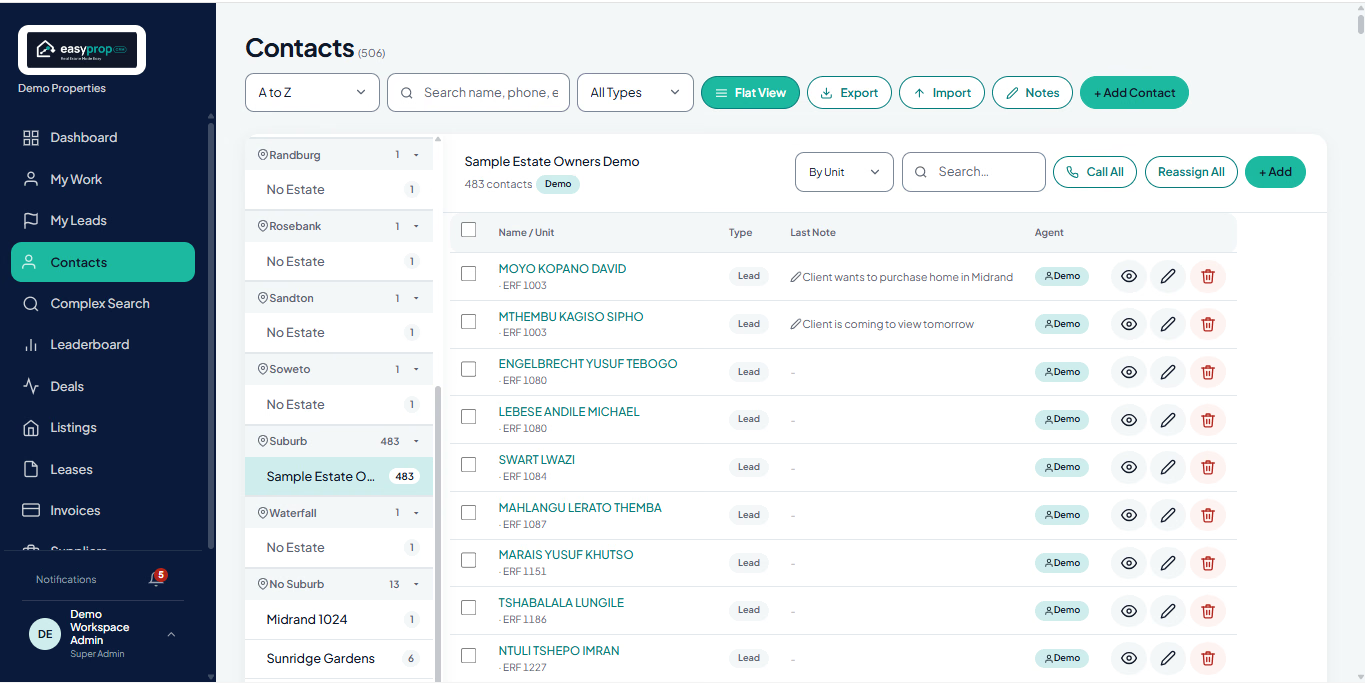
EasyPropCRM organises contacts alongside estate and suburb information, property work and agent follow-ups. That gives the team a shared place to understand who a person is and why the agency needs to speak to them. Relevant sales, leases and invoices add further context to the relationship.
When reviewing the product, use a realistic multi-relationship example. Ask how the agency should represent a landlord who is also buying another property. Confirm the available fields and linking process instead of assuming that every relationship requires a separate contact or that a role label changes an existing agreement.
Role, stage and permission compared
| Concept | Typical example | What it describes |
|---|---|---|
| Contact role | Landlord | The person's relationship to property work |
| Deal stage | Negotiation | Progress on a particular opportunity |
| User permission | Invoice access | What an internal team member may do |
Further reading on contact role
Explore the references and related guidance behind this term.

Contact role FAQs
Short answers to the questions that come up after the main details.
Explore the help centreIs a contact role the same as a job title?+
No. A job title describes employment; a contact role describes the relationship relevant to the agency, such as landlord or buyer.
Should prospective tenants be labelled as tenants?+
Use a distinction that the team understands. An applicant looking for a home and a person with an active lease require different follow-up and records.
Can a company be a property contact?+
Property work can involve organisations as well as individuals. Record the organisation and its authorised representatives accurately, following the agency's verification process.
Does a landlord label prove ownership?+
No. The label provides working context. Verify ownership or authority through the appropriate documents when the transaction requires it.
Ready to see your property workflow?
One subscription for deals, billing, admin and portal syndication. See how EasyPropCRM fits your agency with a focused demo.